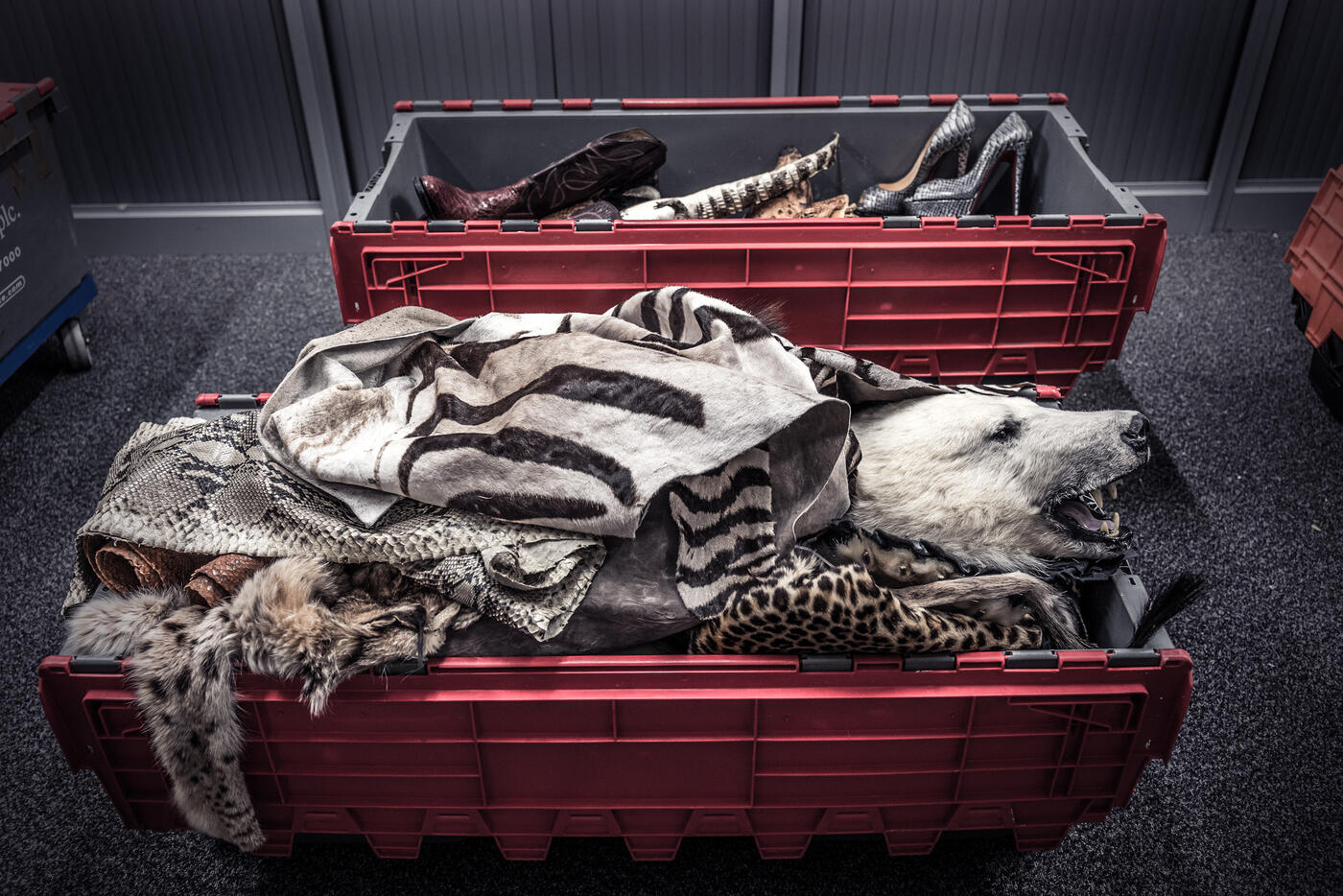
93% of Australians polled in a new YouGov national survey commissioned by Humane World for Animals Australia think that the Albanese Government should be delivering on its election promise to expand the nation’s list of species that cannot be imported as hunting trophies. At the May 2025 federal election, the...
Shark bites over the last two years have rocked the New South Wales surfing and ocean-going community and understandably, it’s left everyone asking what can be done about them. In response, the NSW Government have unveiled a substantial investment in drone patrols that will undoubtedly make our waters safer.
But while these will help, modern, effective technologies like drones and AI stand in stark contrast to archaic and ineffective shark nets that continue to undermine public safety. They need to be retired, and we need to understand that further shark culling will not make our beaches safer.
The species we worry about in New South Wales are the great white, tiger and bull shark. The behaviours of each of these sharks tells you a lot about why culling has not worked in the past and will not work today.
Culling for public safety assumes that a local population of sharks can be reduced by fishing. Bulls, tigers and whites range the entire east coast, are seasonally migratory and are more or less constantly on the move. There’s no such thing as a “local population”. Imagine culling like towing a car from a busy beach car park: as soon as a spot opens up, it is immediately filled by the next passing car.
On top of being an ineffective way to reduce the number of sharks, culling activities attract sharks nearer to beaches and stimulate feeding behaviour. Shark nets, baited drumlines and targeted fishing use bait and add blood, viscera and animal carcasses to the water, drawing in and exciting sharks, making the areas in which culling occurs far more dangerous.
This all begs the question: do we want to kill sharks or do we want to improve safety?
These things are not one and the same and there’s mountains of evidence to prove it. In 2019, Humane World for Animals Australia challenged shark culling in the Great Barrier Reef in court, with judges finding that:
Modern scientific consensus is that the risk of shark bite is not related to shark abundance but rather abundance of ocean users and other external factors such as anomalous weather events. We are convinced that shark culling does not reduce the risk of shark attack on the individual – the scientific evidence before us is overwhelming in this regard.2
And history backs this up. Between 1959 and 1976, Hawaii culled 4,668 sharks, yet no difference in the rate of shark bites was found.3
In fact, in all of recent history, the only instance where a tenuous link exists between culling and a reduction in shark bites occurred in the French territory of Réunion, where the government implemented a cull of target species (bulls and tigers) as a part of a suite of measures. Thankfully, the bites stopped. But was it because of the culling?
Introduced at the same time as the culling were drone surveillance, swimming enclosures, mandates to wear personal shark deterrents in certain areas as well as the complete closure of areas to swimming and surfing. All these measures implemented at once leaves it less clear as to what caused the bites to stop.
It’s important to remember that only 53 bull sharks were culled from 2018-2022 in Réunion. And the simple fact that there are more than 53 bull sharks in the Indian Ocean, suggests that culling wasn’t the reason. Logic tells us it was something else the people of Reunion did to protect themselves.
So, if not a cull, then what can we do? Year-round drone patrols from dawn until dusk at 70 beaches along the NSW coastline will make the New South Wales shark drone monitoring program the most extensive in the world, providing much more vigilant shark surveillance for ocean users moving forward.
With more eyes in the sky, we will see more sharks and more sharks near swimmers and surfers. It’s critical we manage expectations here. We have always shared the ocean with sharks, we are just going to be more aware of how close we come to them.
The next step is for shark nets to be removed from New South Wales waters as soon as possible. Dead and dying wildlife in shark nets attract sharks and the last three shark bite incidents on Sydney’s Northern Beaches occurred near shark nets.
Culling sharks might make some people feel better, but it would be at best a placebo, and it may even be counterproductive. Do we want the community to feel safer, or do we actually want to reduce the risk of shark bite? It’s important we listen to science, not sensationalists. More drones up and the nets out. For safer beaches and safer swimmers and surfers.
References
- 1. Australian Shark Incident Database, Taronga Conservation Society Australia
- 2. Humane Society International (Australia) vs Great Barrier Reef Marine Park Authority and Queensland Department of Agriculture and Fisheries (2019). Administrative Appeals Tribunal and the Federal Court of Australia
- 3. Wetherbee (1994), A Review of Shark Control in Hawaii with Recommendations for further Research. Pacific Science (1994), vol. 48, no. 2: 95-115