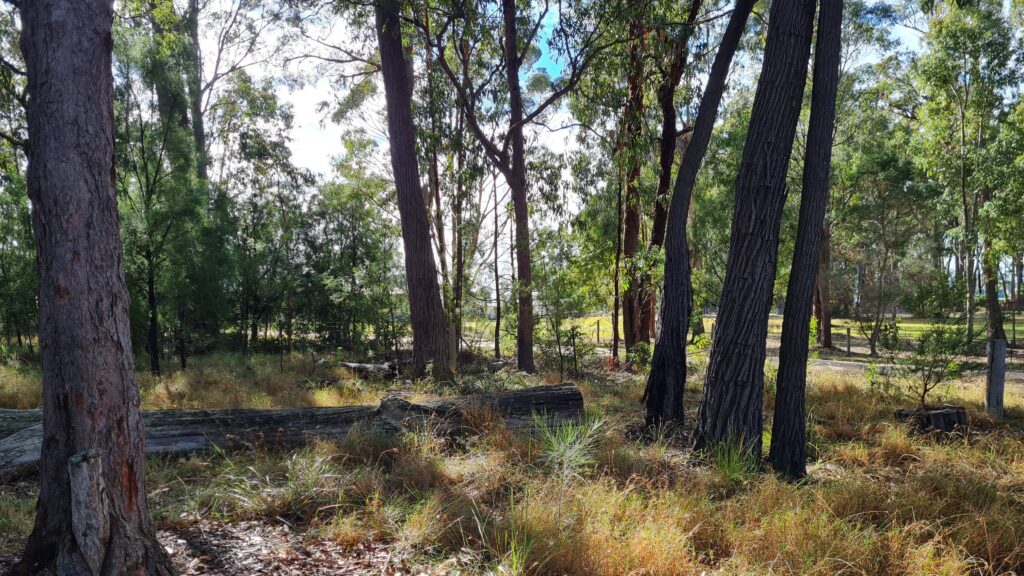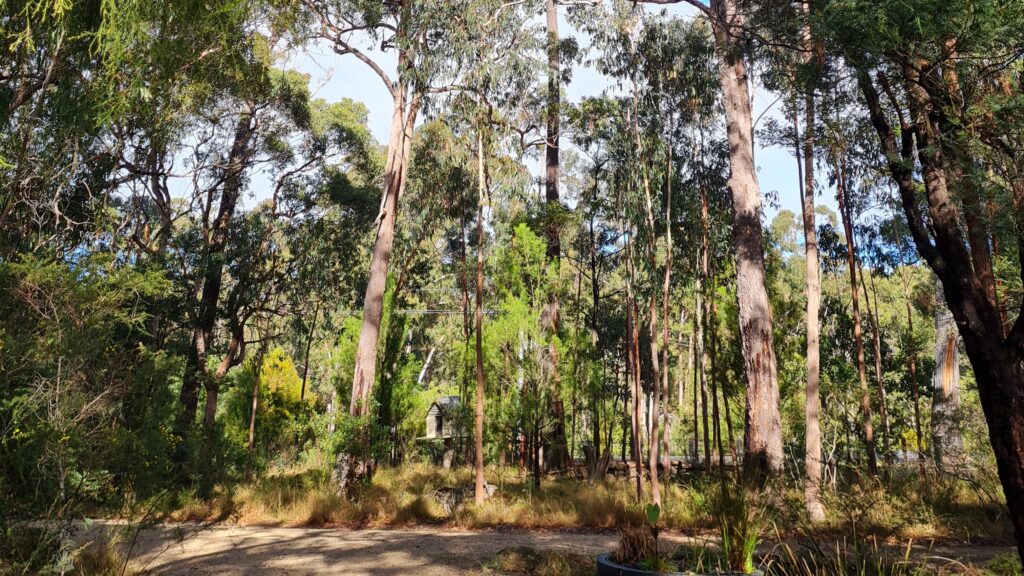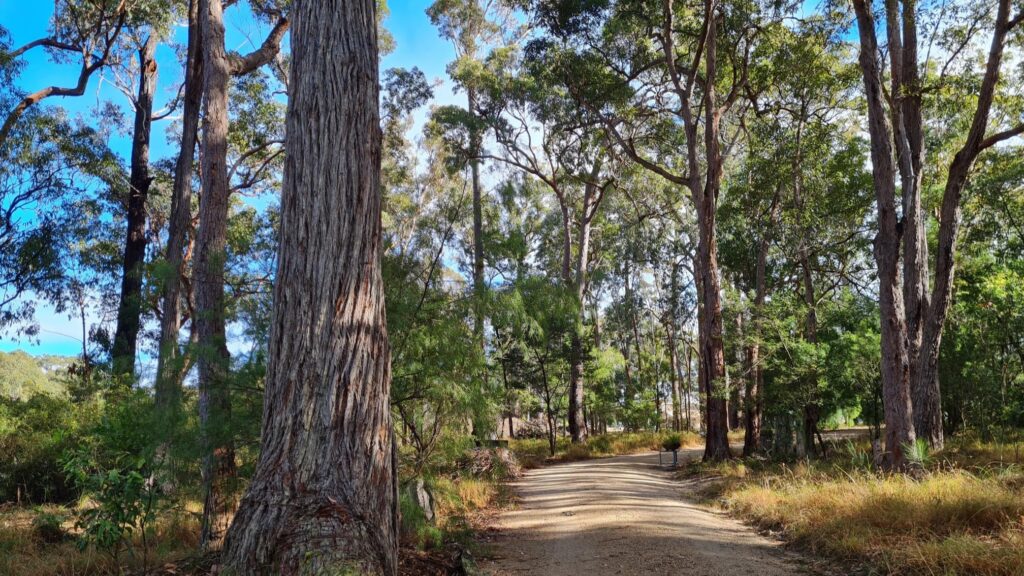
Elizabeth O’Donoghue is the owner of Corymbia Wildlife Sanctuary, a property situated in Mallacoota, Victoria. The property has native bushland, a two-storey mudbrick house, sheds, netted orchard, an enclosed vegetable garden, and is fenced. As the surrounding area is becoming more suburban and losing existing habitat, Elizabeth intends to keep the corridor open for wildlife to travel from the forest beyond a nearby development to the Shady Gully bushland reserve. Elizabeth previously ran a wildlife shelter for over 12 years, gaining experience through education and practice and developing a substantial understanding of wildlife needs. The property is part of the Land for Wildlife program. Liz also supports the Friends of Mallacoota Indigenous nursery, through purchasing tubestock for regeneration purposes.
Corymbia Wildlife Sanctuary spans 0.52 hectares across dry schlerophyll forest and features native flora species such as bloodwood (Corymbia gummifera), cherry ballart (Exocarpos cupressiformis), Acacia spp. including prickly moses (Acacia ulicifolia), she-oaks (Casuarina sp.), hakeas (Hakea sp.), native violet (Viola hederacea), heaths (Epacris sp.), native orchids, paper daisies (Xerochrysum sp.), billy buttons (Craspedia sp.), fringe lily (Thysanotus tuberosus), milkmaids (Burchardia umbellata), kangaroo grass (Themeda triandra), spear grasses (Austrostipa sp.), and other native grasses.
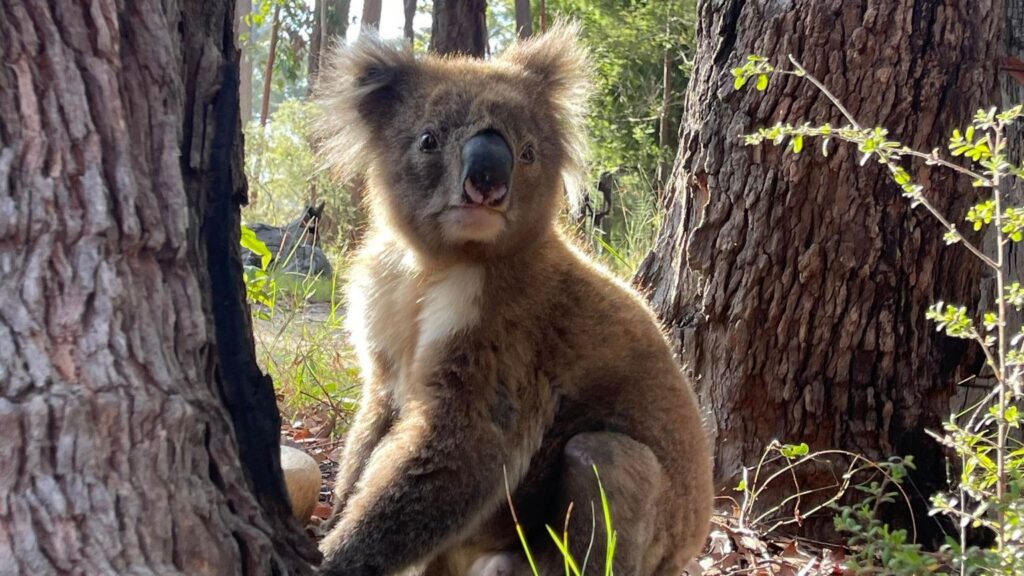
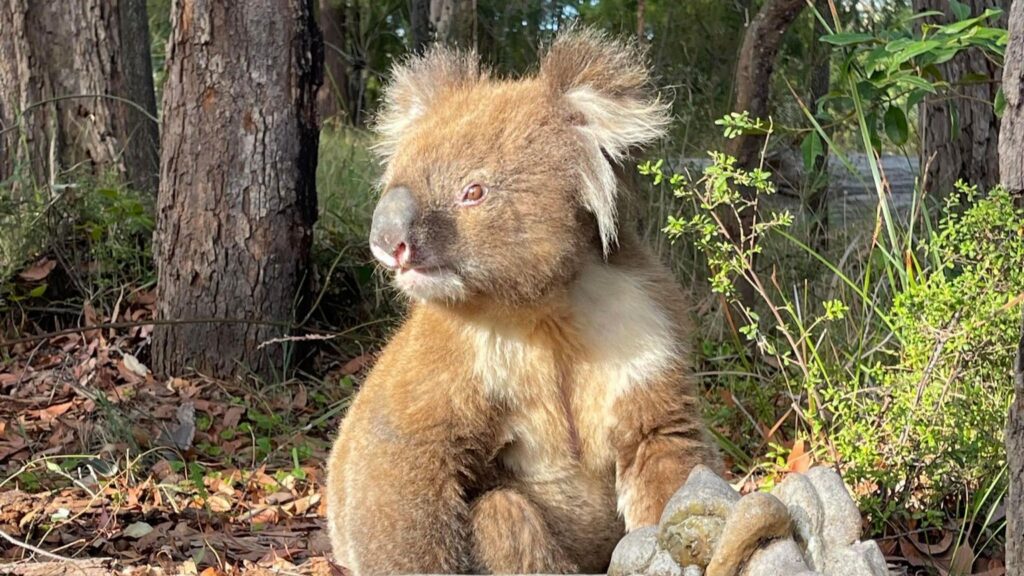
This wildlife corridor has an impressive list of species inhabiting and traversing Corymbia Wildlife Sanctuary, including eastern grey kangaroos (Macropus giganteus), red-necked wallabies (Notamacropus rufogriseus), swamp wallabies (Wallabia Bicolour), bare-nosed wombats (Vombatus ursinus), common brushtail possums (Trichosurus vulpecula), common ringtail possums (Pseudocheirus peregrinus), bandicoots, bush rats (Rattus fuscipes), antechinus (Antechinus sp.), grey-headed flying-foxes (Pteropus poliocephalus), microbats (various species), yellow-bellied gliders (Petaurus australis), sugar gliders (Petaurus breviceps), koalas (Phascolarctos cinereus), kookaburras (Dacelo Novaeguineae), bronzewing pigeons (Phaps chalcoptera), white-headed pigeons (Columba leucomela), wonga pigeons (Leucosarcia melanoleuca), satin bowerbirds (Ptilonorhynchus violaceus), galahs (Eolophus roseicapilla), king parrots (Alisterus scapularis), crimson rosellas (Platycercus elegans), rainbow lorikeets (Trichoglossus moluccanus), currawongs (Strepera sp.), choughs (Corcorax sp.), butcherbirds (Cracticus sp.), blue wrens (Malurus sp.), scrub wrens (Sericornis sp.), firetails (Stagonopleura sp.), eastern yellow robins (Eopsaltria australis), golden whistlers (Pachycephala pectoralis), grey shrike-thrushes (Colluricincla harmonica), goshawks (Tachyspiza sp.), magpies (Gymnorhina tibicen), superb lyrebirds (Menura novaehollandiae), yellow-tailed black-cockatoos (Zanda funerea), whistling kites (Haliastur sphenurus), white-faced heron (Egtretta novaehollandiae) and various raptors, red-bellied black snakes (Pseudechis porphyriacus), eastern brown snakes (Pseudonaja textilis), tiger snakes (Notechis scutatus), blue-tongued lizards (Tiliqua scincoides), lace monitors (Varanus varius), and other lizards and skinks, green and golden bell frogs (Litoria aurea), Peron’s tree frogs (Litoria peronii), common eastern froglet (Crinia signifera), and pobblebonk frogs (Limnodynastes dumerilii) as well as a large variety of spiders, moths, insects, butterflies and other invertebrates.