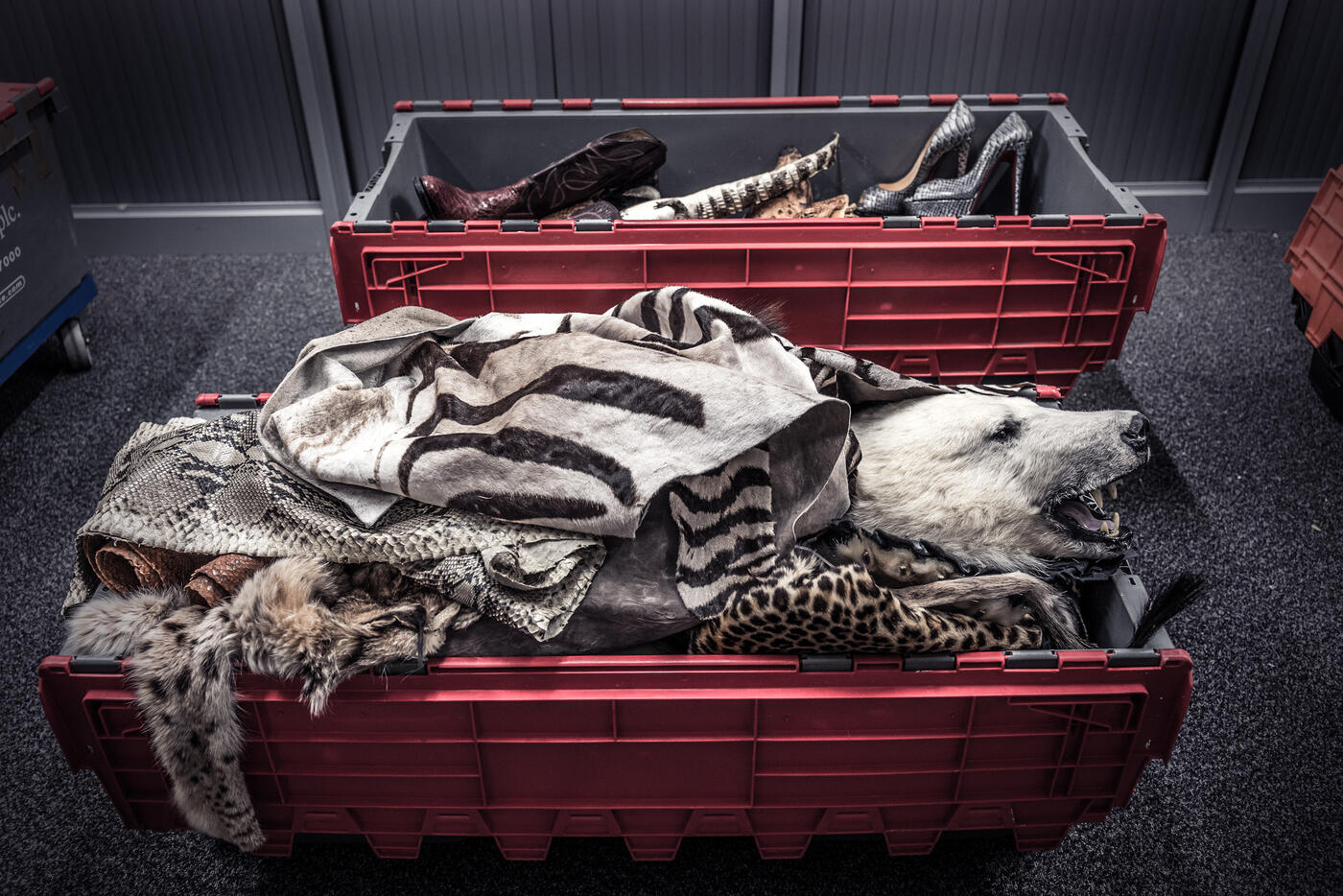
93% of Australians polled in a new YouGov national survey commissioned by Humane World for Animals Australia think that the Albanese Government should be delivering on its election promise to expand the nation’s list of species that cannot be imported as hunting trophies. At the May 2025 federal election, the...
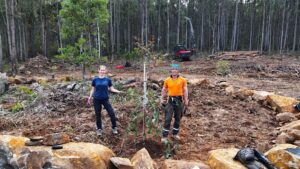
ᒥᔪᓯᐃᐧᐣᓴᑳᐤ owners Jennifer and Andrew planting new life at Beautiful Forest
ᒥᔪᓯᐃᐧᐣᓴᑳᐤ “Beautiful Forest”
Tasmania • UNDERWOOD
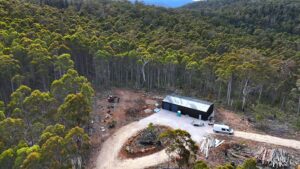
Earlier in 2025, we were fortunate to purchase a large (46-hectare) block of bushland only 10 minutes north of Launceston, Tasmania.
ᒥᔪᓯᐃᐧᐣᓴᑳᐤ is a fully-forested site, with most trees being 40–60 years old, due to prior logging. However, not all trees were felled, with some “big beauties” remaining, including an over 200-year-old eucalyptus that marks
the midpoint of our 800-metre long driveway. This huge tree is a favourite of the birds, including a fan-tailed cuckoo that often sits at the very top, broadcasting his call down the slope.
We had always wanted a bit of Tassie forest and felt an even stronger pull after living in Western Australia with (mostly) shrubs around us. We longed for the tall trees. Being 3,000 km away, touring blocks of land for sale wasn’t possible. So, we sent Andrew’s family on a mission to inspect three and advise us which gave them the sense of being immersed in nature. Next thing we knew, ᒥᔪᓯᐃᐧᐣᓴᑳ (the Cree word for beautiful forest) was ours. We almost immediately found Tasmanian devil and spotted-tail quoll scats nearby. Yellow-tailed cockatoos occasionally visit too, but not as enough as we’d like! So we’ll be planting Banksias to draw them in. Jenn is busy propagating and we’ve started planting smaller eucalypts to attract spotted pardalotes and flame robins down from the high canopy
Like many landholders, we have issues with various invasive species, including cats. We also have infestations of Spanish heath, though with help from friends, we have eliminated about 500 plants from along the roadside. At this stage, control can be managed by hand-pulling, however we recently purchased the adjacent 66-hectare block of land and will need help to control the substantial Spanish heath and gorse there.
We bought this second block of land purely to protect it. Most of it is listed as conservation covenant due to hosting a Threatened Ecological Community (substantial Eucalyptus ovata and E. amygdalina in a low-lying, damp area). We are excited to host local community groups, research scientists, and students who are interested in studying the area. The Tasmanian devil program will hopefully soon deploy a special new motion camera and there is also ample opportunity to study wombats. Got an idea? Feel free to get in touch with us! These blocks of land also feature extensively on our YouTube channel which documents the beauty of the place and our progress on building our new, off-grid house. Visit the Going Off Grid YouTube channel at youtube.com/@GoingOffGridAus
Jennifer Lavers and Andrew Fidler
Members since 2025