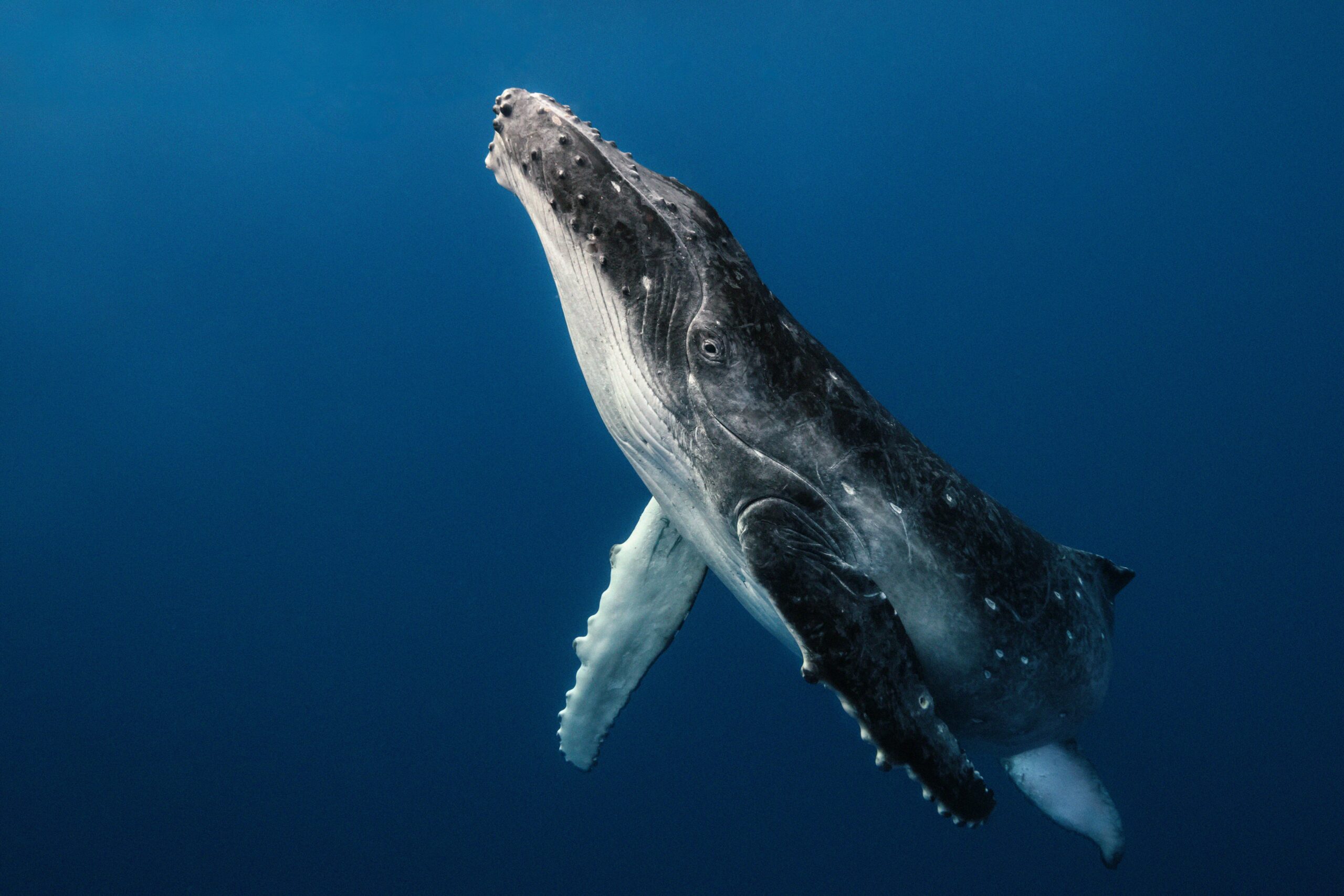

93% of Australians polled in a new YouGov national survey commissioned by Humane World for Animals Australia think that the Albanese Government should be delivering on its election promise to expand the nation’s list of species that cannot be imported as hunting trophies. At the May 2025 federal election, the...
Albatross—a bird whose name conjures feelings of majesty, grace and solitude. They are the great navigators of the globe, soaring vast distances over lonely, wind-swept oceans.
Here are 7 incredible facts that prove that albatross are the most fascinating of birds.
(1) They’re massive
Albatross are the largest of all flying birds with wingspans reaching up to 3.5m—almost as long as a car. The largest species is the wandering albatross, which can weigh up to 13 kilograms. Their wings are perfectly adapted for a life in the air over the sea, but their large size does make take-off difficult. To do so, an albatross must face into the wind and get a running start—much like early aircraft!
(2) They’re long-distance champions
The massive wingspan isn’t just for show. Albatross are extreme long-distance flyers and spend the vast majority of their lives on the wing. Some individuals have been known to circumnavigate Antarctica 3 times in one year (120,000 km)1 while one bird was recorded traveling 6,000 km in just 12 days2!
(3) They have an otherworldly sense of smell
Driving much of this heavy travel schedule is an albatross’s near-constant search for food – and the best way to find food when soaring over the ocean is smelling it. Using small holes at the base of their beaks, albatross have a particularly keen sense of smell. Keying in on dimethyl-sulfide (the chemical released by krill and fish), they can seek out prey from up to 30 km away3!
(4) They’re monogamous
Unlike much of the animal kingdom, albatross are unique in that they mate for life. Though they may only see their partners for short periods of time during the mating season, they form strong bonds and take turns incubating their single egg while the other is feeding at sea.
(5) Mating dances
To strengthen bonds between partners, albatross engage in intricate, coordinated courtship displays, that we might call dances. Each dance is species-specific and for birds that may be seeing their partners for the first time in a year it’s the perfect way to check on each other’s health and fitness and remind them of the sound and scent of their mate.
(6) They’re long-lived
Albatross are among the longest-lived of all birds. One in particular is Wisdom, a Laysan albatross who was first banded in 1956 and was still seen as recently as November 2025, making her at least 70 years old! At her breeding site on Midway Atoll, it is estimated that she has raised as many as 36 chicks in her lifetime.
(7) Legends under threat
Albatross are majestic and unique, and only made more so by the fact that they are under threat. Of the 22 species of albatross, 15 are threatened with extinction primarily due to interactions with commercial fishing. Attracted to the smell of fishing operations, albatross often dive for fish on baited hooks and become ensnared themselves. Other threats including habitat loss, invasive species and the depletion of prey due to fishing all combine to make the future of these magnificent birds uncertain.
Humane World for Animals Australia has worked for many years to mitigate threats to albatross, especially by engaging with the policy and regulatory processes that govern Australia’s commercial fishing. While progress has been made to reduce fishing impacts in Australia, much work remains to be done. We also provide advice to governments around the world on the best ways they can ensures fisheries reduce their impact on seabirds and also for the development of offshore windfarms.
References
- Weimerskirch, Henri; Delord, Karine; Guitteaud, Audrey; Phillips, Richard A.; Pinet, Patrick (2015). “Extreme variation in migration strategies between and within snowy albatross populations during their sabbatical year and their fitness consequences”. Scientific Reports. 5: 8853. Bibcode:2015NatSR…5.8853W. doi:10.1038/srep08853. PMC 4352845. PMID 25747757.
- Richardson, Michael (27 Sep 2002). “Endangered seabirds / New fishing techniques undercut an old talisman : Modern mariners pose rising threat to the albatross. Archived 2009-02-21 at the Wayback Machine” Herald Tribune.
- G.A. Nevitt, M. Losekoot, & H. Weimerskirch, Evidence for olfactory search in wandering albatross, Diomedea exulans, Proc. Natl. Acad. Sci. U.S.A. 105 (12) 4576-4581, https://doi.org/10.1073/pnas.0709047105 (2008).