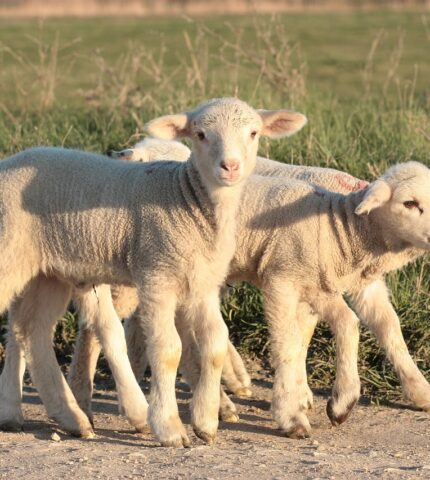
It’s time to end live lamb cutting 

Every year, more than 10 million Australian lambs are subjected to live lamb cutting, also known as mulesing. 

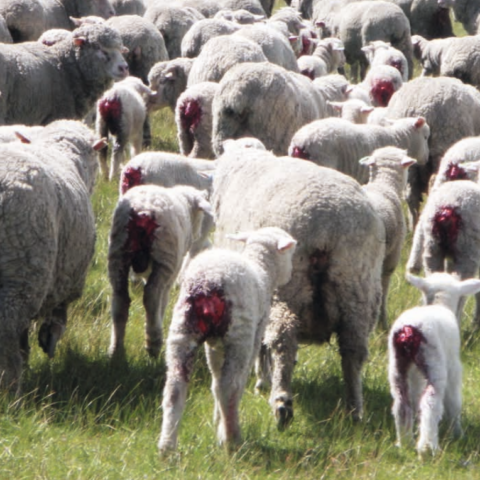
Typically performed when lambs are just weeks old, the procedure involves restraining them and cutting away folds of skin from their tail and hindquarters to reduce the risk of flystrike. 

Many lambs receive no pain relief before their skin is cut. And despite more humane solutions being available, Australia is the only major wool-producing country where this painful practice continues.  

The hidden cost of wool production 

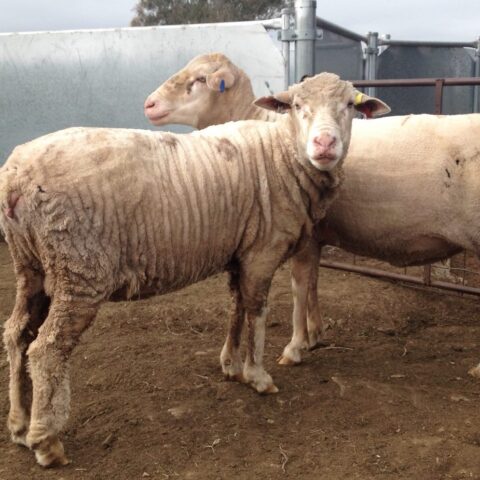
Merino sheep were originally relatively smooth-skinned. Over generations, however, sheep were selectively bred with increasingly wrinkled skin to increase wool production. 

Those wrinkles can trap moisture and create conditions where blowflies lay their eggs. When the eggs hatch, maggots feed on the sheep’s skin and tissue, causing a potentially fatal condition known as flystrike. 

Preventing flystrike is essential. But cutting healthy skin from young lambs is not the answer. 

Live lamb cutting was developed in Australia in the 1920s. Young lambs are restrained in a metal cradle while large strips of wool-bearing skin are cut from around their tail and hindquarters. As the wounds heal, smooth scar tissue forms that is less susceptible to flystrike. 

The procedure causes significant pain and leaves wounds that can take weeks to heal.  
There is a better way

Breed sheep naturally resistant to flystrike

Sheep can be selectively bred with smoother skin and other characteristics that make them naturally less susceptible to flystrike. Many Australian wool producers are already using genetics to successfully produce wool from sheep who do not require live lamb cutting.

Require effective pain relief

While live lamb cutting continues, lambs should receive the most effective pain relief available. Veterinary experts recommend combining appropriate pain-relieving products before and after the procedure. Current rules for pain relief, where they exist, only require it to be applied after the cut has been inflicted.

Support for wool producers

Moving away from live lamb cutting requires planning. Wool producers need practical advice, resources and support to transition their flocks toward sheep who are naturally resistant to flystrike. It requires a nationally coordinated, time-bound phase-out, giving producers the support and time they need to make the transition successful.

Why is live lamb cutting still happening? 

Live lamb cutting has been entrenched in Australia’s wool industry for more than a century.  

Even as our understanding of animal welfare has advanced, progress towards breeding sheep who do not require the procedure has been far too slow. 

Many wool producers have already shown that it is possible to produce high-quality wool without live lamb cutting, and that it is profitable to do so. But without a clear national plan for change, millions more lambs will continue to undergo this painful procedure. 

See what live lamb cutting involves 

Live lamb cutting is confronting to witness. 

Footage captured in 2023 and provided by Collective Fashion Justice shows lambs subjected to live lamb cutting WARNING: This footage contains graphic images of animals undergoing live lamb cutting and may be distressing to viewers:


You can help end live lamb cutting 

Lambs shouldn’t have to suffer simply because the wool industry has been slow to change. We know there is a better way to protect sheep from flystrike. Now we need governments to make the transition happen. 

Add your voice and call on Australia’s agriculture ministers to: 

  • establish a clear, nationally coordinated pathway to phase out live lamb cutting; 
  • make effective multimodal pain relief mandatory while the practice continues; and  
  • support wool producers to transition towards breeding sheep who are naturally resistant to flystrike. 

Learn more about live lamb cutting

  • What is flystrike?

    Flystrike occurs when blowflies lay their eggs in the warm, moist areas of a sheep’s body, including around the tail. When the eggs hatch, the maggots feed on the sheep’s skin and tissue, causing severe pain, distress and, if untreated, potentially death.  

    Australia’s original Merino sheep were relatively smooth-skinned, or ‘plain-bodied’. Over generations, however, sheep were selectively bred for increased skin wrinkling and wool production. These wrinkles can trap moisture from rain, urine and faeces, increasing susceptibility to flystrike. 

  • How did live lamb cutting, or mulesing, begin?

    In the 1920s, wool producer John Mules discovered that cutting away folds of skin from around a lamb’s tail created an area of scar tissue where wool would not grow, reducing the risk of flystrike in that area. That practice became known as ‘mulesing’ after John Mules. Today, we use the more descriptive term ‘live lamb cutting’. 

  • Why is live lamb cutting so controversial?

    Live lamb cutting is a painful surgical procedure, typically performed when lambs are just a few weeks old. Lambs are restrained in a cradle and strips of wool-bearing skin are cut from around their tail and breech. The wounds are then left to heal and form scar tissue.  

    Pain relief can reduce some of the pain associated with the procedure, but it does not eliminate it and is typically only applied after the folds of skin have already been cut away. And despite the severity of the procedure, pain relief is still not legally required in many Australian jurisdictions. No jurisdiction currently requires the administration of pain relief to be applied before the cuts takes place. 

    The fundamental problem is that lambs are being bred to be susceptible to flystrike and subjected to a painful surgical procedure, when breeding offers a long-term solution that avoids flystrike and the need to cut them at all. 

  • Why do you call it ‘live lamb cutting’ instead of ‘mulesing’?

    ‘Mulesing’ is a term that gives people little indication of what happens to the lamb. ‘Live lamb cutting’ is much more descriptive.  

    Many Australians are shocked when they learn what the practice involves, particularly when they discover that millions of lambs continue to be subjected to it each year and that Australia is the only major wool-producing country where it continues. 

  • What is the best alternative to prevent flystrike?

    The long-term solution is to breed sheep that are naturally resistant to flystrike. 

    Just as selective breeding contributed to sheep developing greater skin wrinkling, it can be used to breed sheep with smoother skin and other characteristics that reduce their susceptibility to flystrike. Some Australian wool producers are already successfully producing wool from sheep who do not require live lamb cutting. 

    However, progress across the industry has been far too slow. Without strong leadership and a clear national phase-out, millions more lambs will continue to undergo this painful procedure.  

    That is why government leadership is now essential. 

  • What are consumers and brands saying?

    Animal welfare organisations are far from alone in calling for change. Consumers are increasingly questioning how the wool they buy is produced, while major brands and retailers are moving away from wool for live-cut sheep. 

    Over several years, Humane World for Animals has helped drive a major shift in the market by engaging with brands and retailers and encouraging them to commit to phase out wool from sheep subjected to live lamb cutting. Today, more than 330 brands and retailers have policies against live lamb cut wool or commitments to phase it out of their supply chains. Some businesses are sourcing wool from countries where live lamb cutting is not practiced, while others are moving away from wool altogether. 

    The message to Australia is increasingly clear: global markets are moving on, and the Australian wool industry risks being left behind. 

  • What is The Broken Promise report?

    More than 20 years ago, in 2004, Australian wool industry leaders committed to phase out live lamb cutting by 2010.  

    That promise was broken. 

    Since the 2010 deadline, an estimated 150 million more lambs have been subjected to the procedure, despite a proven pathway away from it already existing. 

    Humane World for Animals Australia, FOUR PAWS and the Australian Alliance for Animals released The Broken Promise report in 2024 to expose the failure of Australia’s wool industry leadership to deliver this transition and demonstrate why governments now need to act. 

  • How can we end live lamb cutting?

    Australia is the only major wool-producing country where live lamb cutting continues, putting both animal welfare and the reputation of Australian wool at risk. 

    Humane World for Animals does not support an overnight ban that could leave sheep vulnerable to flystrike. Instead, we are calling for a nationally coordinated, time-bound phase-out that gives wool producers the certainty, support and tools they need to successfully breed naturally flystrike-resistant sheep. 

    We are also encouraging more brands and retailers to commit to sourcing wool from sheep who have not been subjected to live lamb cutting. 

    Veterinarians, consumers, brands and many Australian wool producers already support moving beyond the practice. With government leadership, Australia can accelerate the transition to proven breeding solutions that protect sheep from flystrike naturally, while ending live lamb cutting Australia-wide. 

Read more

Animal advocates agree: the transition away from mulesing must be led by evidence, not ideology

Animal advocates agree: the transition away from mulesing must be led by evidence, not ideology

The debate over mulesing is too often framed as a contest between animal welfare advocates and farmers. But calls to phase out this practice are not driven by ideology. They are driven by veterinary…

Read More
Animal protection groups welcome peak veterinary body’s call to phase out mulesing

Animal protection groups welcome peak veterinary body’s call to phase out mulesing

Australia’s leading animal protection organisations have united to welcome the Australian Veterinary Association’s (AVA) new policy that strongly advocates for the phase-out of mulesing (otherwise known as live lamb cutting), which would ultimately spare…

Read More
Click go the shears: Live Lamb Cutting

Click go the shears: Live Lamb Cutting

Australia once ‘rode on the sheep’s back’. But it’s not their back we’re worried about. It’s an oft-used phrase: ‘If you knew where it came from, would you eat it/touch it/buy it…?’   Because of…

Read More
icon-bg-turtle
close icon