Right now, fires in Victoria are compounding an already critical situation for wildlife, particularly grey-headed flying foxes, following a mass starvation event earlier this year that resulted in a high intake of juveniles into care. This situation is exacerbated by extreme heatwaves triggering a severe flying fox heat stress event. At least one wildlife rehabilitation facility has been destroyed. Other carers have evacuated or are preparing to do so, placing enormous strain on an already overwhelmed care network.
Donations made to this appeal are restricted to funding our rescue and relief efforts for past, present and future natural emergencies, except for new monthly donations which help to fund ongoing work to protect animals.
January 27. 2026: Four members of the Australian disaster response team landed in Victoria to continue ground support. With temperatures exceeding 45°C in many parts of the state, flying-fox carers in particular are on high alert. Many bat deaths have been reported from nearby colonies and more orphans are expected to come in to care imminently.
January 26, 2026: Another heatwave hit areas where our team is based with temperatures around 38°C and expected to rise to 42°C tomorrow which is well into the flying-fox danger zone in terms of heat stress. Several kangaroos are still in burns care and more kangaroo rescues are still coming in.
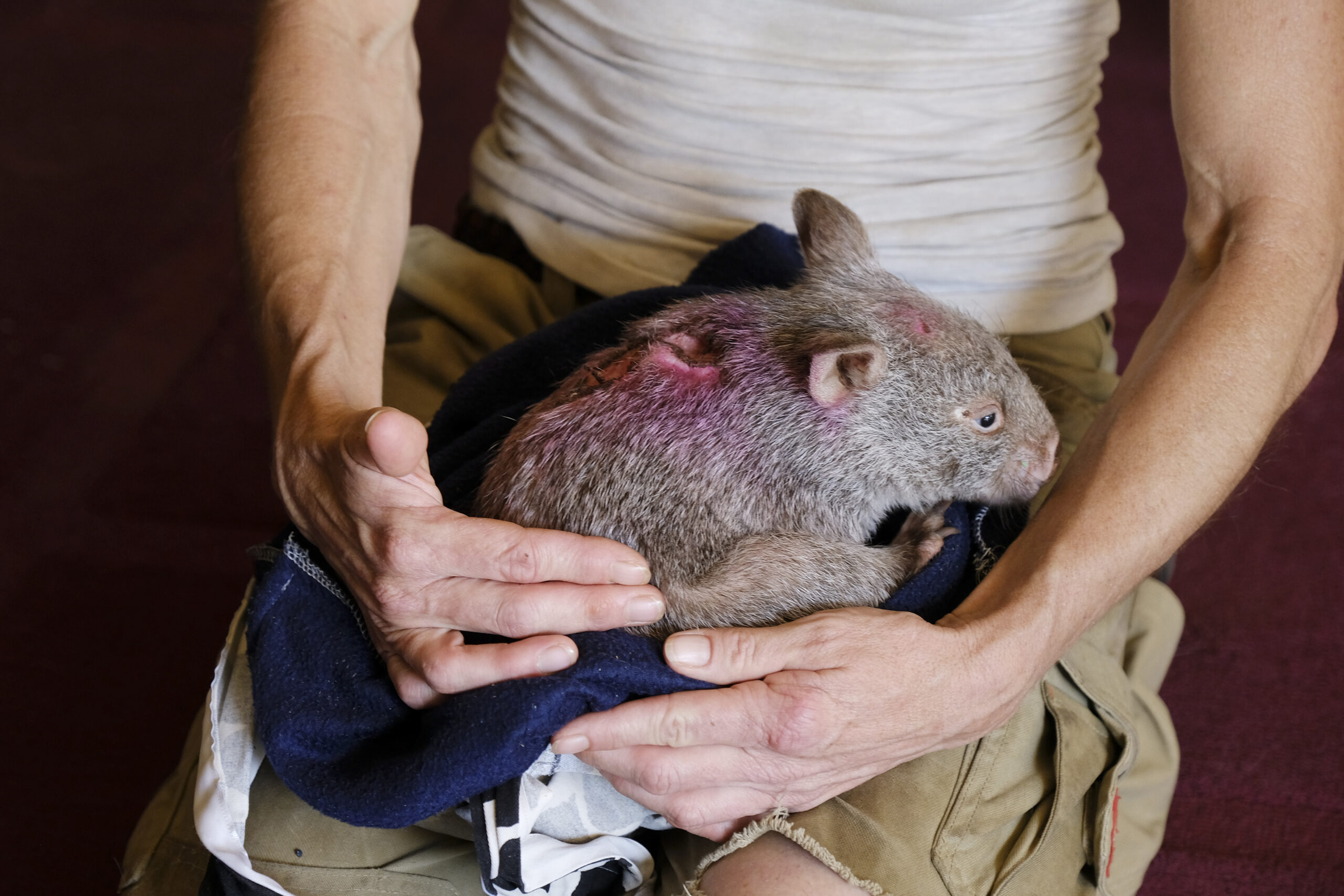
January 21, 2026: Yesterday we did bandage changes and had a complicated case where a mother kangaroo wasn’t able to give enough milk to her dependent joey, who showed extreme signs of malnourishment, including dizziness, lethargy, dehydration and weight loss. He is now in care with three orphans. Every day, at least one new animal burn victim has come in for treatment, and carers continue to work around the clock to provide adequate care. With injuries going untreated in wildlife for this long, we are now dealing with a high risk of infection.
January 20, 2026: There are still many fire-affected animals on the ground with calls still coming in from members of the public with compromised kangaroo sightings, significantly mums. Our team went out today and conducted searches, managing to dart and capture three kangaroos. Mums appear to be far worse affected than babies, even out of pouch joeys who mums may be letting back into pouches for protection.
January 18, 2026: Our team has continued supporting emergency affected shelters, including tending to burn victims and sorting bushfire medical supplies, delivering fruit for emergency affected flying foxes, and searching for injured kangaroos and other wildlife.
January 15, 2026: Our two responders were invited onto a private property with a number of kangaroos and swamp wallabies reported with injuries, with one staff member providing assistance on the ground while the other flew our rescue drone around the property to identify animals in need and provide an aerial view for the darting team in case targeted animals dispersed. At one point, a hail storm hit the property with the associated wind change requiring evacuation of the area. Later, both headed back to Animal Abbey, where they assisted with wombat enclosure groundwork, washing, fruit chopping, orphaned bat and wombat feeds, and stocking of a large flying fox enclosure with 35 bats with food and foliage for the night.
January 14, 2026: Two members of our staff deployed to Castle Reigh, close to two other local facilities we are coordinating with on this response. There, they helped the owner of Animal Abbey move 35 grey-headed flying foxes and four bare-nosed wombats to a neighboring property while tree works were done around facilities to reduce fire risk. We bottle-fed several wombats and two orphaned flying fox pups and assisted with cleaning cages, washing bottles and making up formula. Later, we transported some kangaroos with burns who needed to be darted and taken to a shelter for assessment and treatment.
