(March 25, 2026)—An alliance of animal welfare groups is calling out Victorian Premier Jacinta Allan MP as stakeholders were informed that long-awaited reform to the state’s animal welfare legislation may not make it in front of parliament this year due to a busy agenda and fewer sitting days. The Australian...
When disaster strikes, wildlife rescue is rarely quick or simple. It is a slow, meticulous act of care that often begins with a single phone call from a worried member of the public, or a sighting by a search team moving through burned country.
During the ongoing bushfires in Victoria, Humane World for Animals teams have been deployed where the need is greatest. Right now, eastern grey kangaroos are among the animals most severely affected. Fast-moving grass fires have left many kangaroos with horrific burns to their feet as they flee across scorching ground to escape the flames.
When an injured animal is spotted, a wildlife rescue team will create a plan to assess them and often approach with a veterinarian and a specialist darter. After tranquilisation, the kangaroo gradually becomes drowsy, lies down and falls asleep.
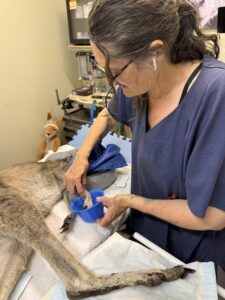
This precious window allows for a rapid assessment in the field and a decision about whether the animal can be treated on site or needs to be transported; often alongside others requiring the same intensive care.
During the recent fires, we have focussed much of our efforts on assisting Red Box Wildlife Shelter, a long-time member of our Wildlife Land Trust program and a facility we have supported for several years with infrastructure, upgrades and medical supplies.
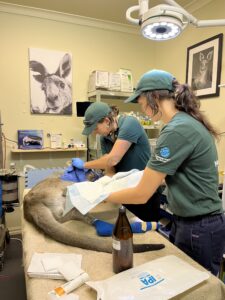
Sedated kangaroos are carefully loaded into the “Roo-bulance”—a large padded cart—and taken inside for weighing, pain relief and a second, more detailed veterinary examination. Some then move straight to the operating table, where hours of treatment can follow.
Burn care is confronting. Eyes are checked first using fluorescein dye to reveal potential damage from embers that may require antibiotic treatment. Feet, however, usually bear the worst injuries: peeling footpads, raw tissue and, heartbreakingly, maggot infestations in untreated wounds. Burned skin is gently flushed and rehydrated, maggot larvae painstakingly removed one by one, and antibacterial burn cream worked deep into every crevice. Layers of specialised dressings and bandages follow.
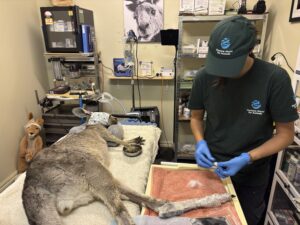
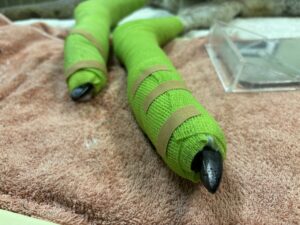
Severe dehydration is tackled alongside wound care, with up to 10% of a kangaroo’s bodyweight, sometimes litres, of electrolyte fluids injected slowly under the skin. A long, exhausting process for both animal and carers.
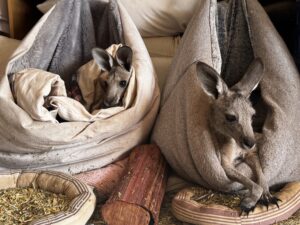
Once stable, kangaroos are moved to recovery huts at Red Box, laid on hay with water and fresh feed within reach, waking from sedation under quiet camera watch. In some cases, family groups must recover together, adding yet another layer of complexity.
And still, more kangaroos arrive.
Bandage changes needed every other day can continue for weeks, demanding hours of labour from multiple staff and volunteers. It is relentless work, but it proves something vital. Even in the worst conditions, with the right care and commitment, remarkable recovery is possible.